
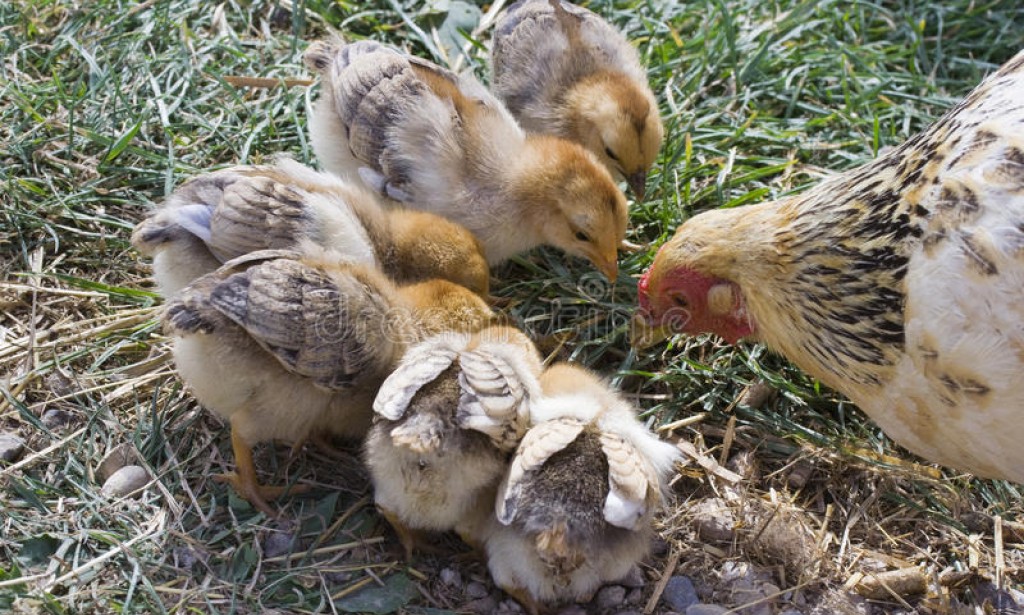
WHEN FOWL FEEDS HER CHICKS . . . HUMAN HIDE FOOD FROM CHILDREN!:
The bestiality In Humanity
By Tunji Ajayi
In “Culture of Silence” (March 25, 1996, Nigerian Tribune) I had averred that Nigerians are the most resilient humans on earth. This couldn’t have been an exaggeration. Therein, I recalled the extent at which an average Nigerian could bear the most heart-crushing pain and psychologically excruciating situation without complaints. A rare gift that nurtures peace; but quite often the breeder of graveyard peace.
Fela Anikulapo Kuti, the perspicacious musical impresario and a seer understood his countrymen well and sang his epic song “Shuffering & Shmilling . . . 49 sitting 99 standing” in 1978. Because the asphyxiating condition remained unchanged, Fela hollered: “Everyday na the sameting”. Yet Nigerians weren’t jolted. The more they suffered, the more they bear the inflicted excruciating pain by the ruling class with pretentions smile. Even when things go awry, the Nigerian man would wear his ever charming look, and radiate uncrushable spirit of a coupon player. “He go better soon. I shall overcome one day soon”, he would console himself till he goes back into the grave.
Nigerians need their special lexicon written in contrary and ironic terms. Nigerian man is sick and at the point of death; but he would chant “I am strong. God forbid bad thing”. Even our politicians often play God. I have never seen any Governor or President who ever fell sick in Nigeria. Even when it is obviously so, having been placed on oxygen and lying half-dead on stretcher; Nigerians are often told the lie: “His Excellency is on a special trip to Europe and America to learn the art of good governance.” I recall the story of one only educated man in his village made up of stark illiterates. In the country of the blind, one eyed man is the King. Though bitten by a snake; he was speaking in tongue rather than state his problem clearly; “The lethal poison of venomous coral serpent traverses thy brethren vein!” he kept shouting and writhing in pain until calamity struck. Urgent help eluded him since no one understood his malapropism, nor came to his rescue till he died a painful death. Nigerians are the strangest, but most special people in the universe.
I recalled that in that year 1996, there was unusual scarcity of kerosene. The product used to be so commonly available in the olden days, and provides succor for the common man to cook, and perhaps power his lantern and Tilley lamp to light up his room and the neighborhood, since he could barely afford the “high cost” of electricity provided by the then Electricity Corporation of Nigeria (ECN). (Hmm!) First, the price soared to prohibitive level beyond the reach of the common man around 1996, until it became unavailable to the masses. I recalled Giffen goods in economics. We were told they are goods of ostentation. Wealthy men purposely buy them because they are too costly for ordinary man to afford. Procurement by the rich is to show class stratification. A wrist watch simply tells you time of the day. But an affluent man has his own preferred type. Ditto for his choice automobiles. A Volkswagen Beetle car simple moves you from point A to B. But a rich man won’t buy it. Though durable, it is too cheap for him. He would tell you it is infradignitatem to ride in a cheap automobile. Oh; he meant it is too beneath his dignity to use such goods. Hence, he would opt for luxurious Bugatti La Voiture Noire, Pagani Zonda Ferrari, Lamborghini Veneno, Rolls Royce Sweptail or even customized cars named after himself; which do not fly in the sky, but merely moves from point A to B just like the poor man’s Volkswagen Beetle car. Thus, in a capitalist society; often enmeshed in social stratification and class segregation phenomenon, the opulent man has his choice products to flaunt and oppress the downtrodden. To unleash terror on the psyche of the poor, politicians would argue that the forces of supply and demand have made poor man’s products to soar. The forces hardly bring the price downwards. It is always upwards. And so, due to his reticent and thick skin he developed, we can always be sure that when the price of kerosene skyrocketed, the Nigerian woman would find the alternative without raising any query or complaints. She would use ògùnsò – a local contraption from palm-kernel waste. If she doesn’t find it, she would use sawdust. And if sawdust price also soars, a Nigerian woman would find another alternative. She would go to her children unused books, and cook with sheets of paper. Should the government legislate against the use of paper “to avoid fire outbreak”, an average Nigerian woman would still stretch herself further beyond limit. She would search for his children rags and cook. If that is not available, she would hop into the bush and find firewood.
Should there be fuel scarcity today, the government already knows that Nigerians would be less perturbed but bring water, gaari & groundnut to the fuel stations, queue up for days, sleep inside their cars beside the dangerous roads to access the fuel nozzle point all in a bid to buy as low as five liter of fuel most could afford; either to run their taxi cabs to eke out a living for the following day, or run their rickety Tiger generating set; being the common alternative solution to erratic electricity supply by the moribund, extortionate power generating companies.
Nigerians hardly make peremptory demands. All they have always demanded from their government from time immemorial are mere basic necessities viz; water supply, good road, affordable food and regular electricity supply. Until COVID-19 scourge dealt them a lethal blow, causing Nigerians to obey the stay-indoor directive, “palliative for the vulnerables cliché” was never in their lexicon. This, the government still failed to give. With provision of basic infrastructure they were ready to forge ahead, while singing “Dum Spiro Spero” since they believe that when there is life there is hope. But the leaders are too busy to think as they engage endlessly in the business of sharing our collective patrimony and the filthy lucre of office.
Few years back I travelled to a distant West African country. For some time I became puzzled due to what I observed. Why? By 6.00 a.m. their streets were still empty of human and vehicular traffic. I asked why and was shocked to hear they hadn’t woken up from their sleep and previous night merry-making hang-over. In my own Nigeria, by the wee hour of 4 a.m. daily, the streets were already filled with both human and vehicular traffic, with millions of Nigerians already woken up, hurrying to their places of work to eke out living. Customarily, they are very industrious and hard working people. But their leaders also took advantage of those positive traits, viz – their resilience and unrelenting habit to eke out living. “They would always fend for themselves” our leaders seem to be saying, as they brainstorm on sharing the booty of offices and awarding humongous salaries and emoluments to themselves for being busy doing nothing.
Many of our university, polytechnic and college graduates with great intellect and uncommon skills roam the streets daily without gainful employment. Yet our leaders do not want banditry, armed robbery, kidnapping and anti-social vices in the society. While they merely pontificate daily on what seem to be the solutions, they refuse to embark on seemingly plausible actions. Our vast land alone and its resources could offer massive employment opportunities in agro-industrial and allied sectors and engage our youths. All our textile mills and thousands of other industries used to be viable and offered massive employment opportunities until one after the other, they folded up due to lack of basic infrastructure to run.
For every 60 minutes of inactivity and idleness, the devil offered alternative jobs for the teeming idle hands. It is only in Nigeria that the government promises industrialization without provision of regular electricity supply to power the industries. A country without regular supply of electricity cannot maximize the potentials of her youths. As they wallow in idleness each day, their full potentials and intellectuality are submerged in the mire of redundancy. Youths productive hours and capacity to contribute to the gross domestic product are lost daily! The aggregate of such losses yearly is unspeakable. Yes. There can never be progress in a nation whose leaders are too busy to think out of the box.
Unbeknown to most rulers, long years of sufferings from bad governance often turns the hearts and minds to become callous to horrendous acts of injustice. Thus, recently the hitherto painstaking and resilient youths protested loud, having been taken for granted far too long and consequently pushed to the wall. But how could millions of youths have simultaneously revolted against a passive government that flaunts empty promise, in a country with so massive geographical size? The answer is obvious. According to Jonathan Swift, an Irish born English writer: “We are so fond of one another because our ailments are the same.” The teeming youths are commonly united by hunger, poverty, unemployment, social and economic stagnation. Consequently, the government’s insensitivity gave room for an uprising. And like Fela once prophesied: “This uprising will bring out the beast in us.” It did. The crisis saw an Oba losing his traditional staff and insignia of office to hoodlums who took advantage of the mayhem to foment their angst. An 11-year old boy was reportedly sandwiched amongst the protesters who ran over a police station, seized the weaponry; drove the corps away and seized the Divisional Police Officers uniform, dressed in it and declared himself the substantive DPO instantly! Youths vehemently protested against bad governance. Good. Hoodlums destroyed useful properties that belong to us all. Appalling! The COVID-19 palliatives which our politicians had earlier sworn were evenly distributed to the needy were found tucked away in many warehouses across the country! How else do beasts also behave? Many protesters were maimed and killed; while the authority claimed the Army was never at Lekki Toll Gate of disaster, needless shooting protesters. But they were alleged to have claimed much later that only “blank bullets” were fired at the protesting youths. Any wonder Fela sang his “Government Magic” wherein he hollered: “Dem dey dabaru everything . . . turning red to blue . . .”
Many youths ordinarily might not shun virtues to pursue vices if they had good and enabling environment to apply their full potentials. But without basic amenities - even simple electricity, what do our leaders think will be the effect of wasting away these vibrant youths’ God-given talents and 24-hour time period daily, and its cumulative effect for many years? Unless Nigeria looks forward and sincerely tackles her multifarious problems, it may never move forward.
Perhaps, here we need to urgently pull the ears of government sycophantic advisers before driving the nation further to the brink of calamity and precipice. Government feels the core problem of this crisis was the pervasive power of the social media, and has repeatedly sworn to “regulate” it to stem the tide of alleged falsehood peddling. Be that as it may, the truth is that true emancipation from suppression and oppression comes from the minds and not from the media tools or equipment. Like revolutionary instinct, it erupts and surges in the oppressed humanity like an unstoppable ocean torrent. Hence, a little spark and reactionary instinct ignited the 2010 Arab spring. It is a prayer than the government learns from her past errors and jumps out of her cesspit of lassitude and passivity to bring out comedy out of this tragedy, by doing the right thing. Like a writer once said: “Crisis creates change, it could either be positive or negative.”
Why did the aggrieved youths refuse to leave the streets even after the government had promised to accede to their requests? Why would a child distrust his own father? The answer is simple. If the father had always told lies or renowned for making vain promises in the past. Does the government tell plain truth? When plain truth is hidden, brazing falsehood is peddled. Nigerians can recall the cock & bull story of those 15 Chinese medical team with nocturnal entry into Nigeria, but whose mission, we were told initially was to help stem the tide of Covid-19 at the earliest stage of the scourge sometime in April 2020. When their whereabouts were unknown after the 14-days mandatory quarantine period granted had long expired and questions were raised, the government simply wore blunt face, claiming that many of them were actually technicians and staff of CCECC engineering company. Mounting pressure once made the Health Minister blurt in a rage: “. . . I will be happy if you don’t ask me where they are . . . they are not really our guests . . . “ Indeed, the Covid-19 palliatives procured were not wholly funded by the government but also by the kind and public spirited individuals, NGOs and philanthropists. Yet, many state governments developed cold feet towards distributing them to the needy. What then is bestiality? The greatest calamity is that many public office holders often seek after what they do not really need, so they still feel unfulfilled even after securing them.
I have seen the mother chicken giving food to her children. It is bestial for a father to hide food away from his children. Indeed, COVID-19 and #EndSARS protests are great revealers of the acute bestiality in humanity. Except for them, perhaps Nigerians would not have known that the essential products were still hidden in various stores and warehouses in many states across the country, even after various state governments had sworn to high heavens that they had been “massively distributed to the vulnerable; but who are under the pang of crushing hunger and death-dealing squalor? Who told most lies? The government or the social media? What often happens to the seized illegal rice at the borders? Why did they emerge at a point to “distribute to the masses to quell hunger” if, as we were often told were destroyed to serve as deterrents to smugglers. Who told most lies? What were the people often told about their leaders’ state of health, and most often, the bills incurred for their foreign treatment? What do our leaders tell us when they are seeking votes, and what do they do thereafter after getting into office? Who tell lies most?
Indeed, , the black nationalist and freedom fighter late Marcus Garvey provided a good lesson on good leadership and selfless services when he stated: “I asked, 'Where is the black man's Government?' 'Where is his King and his kingdom?' 'Where is his President, his country, and his ambassador, his army, his navy, his men of big affairs?' I could not find them, and then I declared, 'I will help to make them.” To what extent has our leaders assuaged the masses anguish and despair when common foods are hidden from them while they squirm in hunger, want and despondency?
For those who seek political office for the purpose of selfish gain, here are words of wisdom for them all: “Like a partridge that hatches eggs it did not lay, are those who gain riches by unjust means. When their lives are half gone, their riches will desert them, and in the end they will prove to be fools.” May Nigerian leaders have the wisdom to learn from this incontrovertible message of Jeremiah 17:11. One thing is clear. Truth often tastes bitter and sounds acerbic. Nonetheless, it liberates. It doesn’t change colour. Only gimmick does. Like Louis VI of France once said, “it is better a thousand times to die with glory than live without honour”. Let our leaders be in search of unblemished honour now and shun vanities and inanities. Verbum Satis Sapienti
*Tunji Ajayi, a creative writer, biographer, and audio-visual documentary producer writes from LC-Studio Communications, Nigeria (+2348033203115)

You must be logged in to post a comment.