
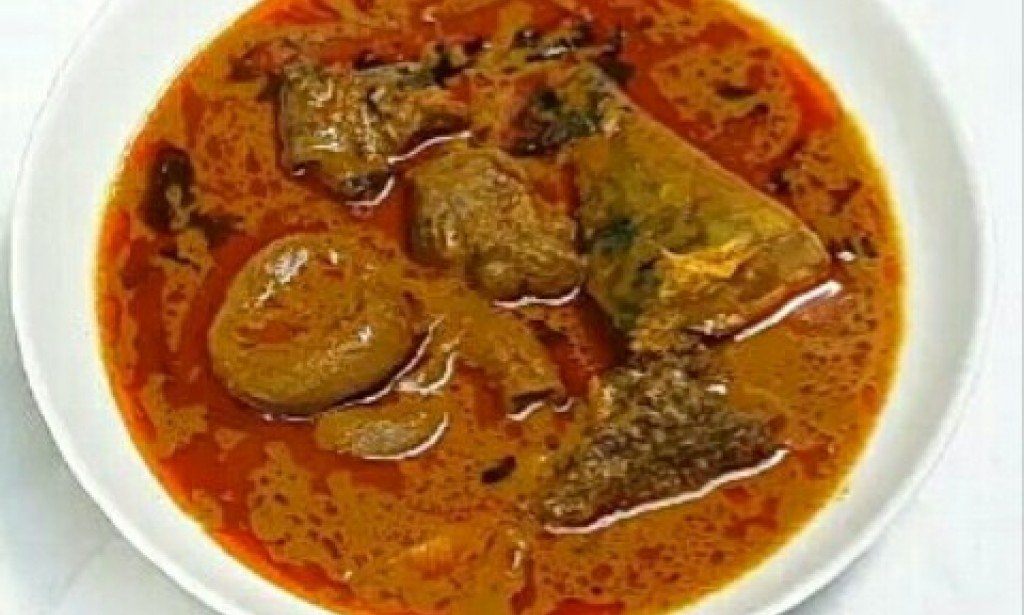
This is the Yoruba African soup that is not so popular, even among the Yorubas although it has been found that some other ethnic groups like Igbo and in Niger delta especially Itsekiri tribe of same Yoruba have their own version called ofaku and banga respectively. Probably because it is not a fast prepare like ewédú soup.
The Ẹgẹ Soup (Palm kernel soup)
In making Ẹgẹ soup, (which is pronounced Ẹ as in air, and gẹ as in get). Follow us as we let the cat out of the bag. This is finger licking when prepared with iyán (pounded yam). Hmmm, its always a tasty delight!... You will surely want to try it.
Ingredients:
Fresh palm nut fruits ( ẹyìn), diced onions, blended pepper (atarodo), stock cubes, salt, mashed locust beans (irú pètè) stock fish or deboned tilapia fish, boiled meat, cowskin (Ponmo), scent leaves or curry leaves.
Cooking Procedure:
Extract the palm nut from the bunch (be careful as they are prickly and they can injure the handler). Then wash and cook in water over a medium heat. When the plam fruits are tender and soft. (you can check this by pressing a fruit between your fingers, but you have to be careful).
Sieve out the water and pound the fruit lightly in a mortar (Don't pound too hard, you just need to seperate the fleshy part from the kernel). Then smoothen with a pestle ( just like we do when we smoothen pounded yam to make it fluffy). You remember? The fleshy part would have formed an oily thick liquid, then sieve out the liquid and rinse out the mortar.
Prepare a clean pot and set on medium heat, if you have beef broth, you can add this with scent leaf first, but if not, then pour the sievate and the locust bean with scent leaf into the pot and allow to boil with constant stirring for 15 minutes.
Crumble in the stock cubes, add salt to taste then the deboned fish, pònmó and pre-boiled meat. Lower the heat and allow to simmer for another 15 minutes and your Ẹgẹ soup is ready to be served!
Serving:
It can be served with solid foods such as iyán (Pounded yam), semovita or ẹko (Solid Pap), even Àmàlà or ẹba.
Conclusion:
It is worth trying for it is so delicious.

You must be logged in to post a comment.