
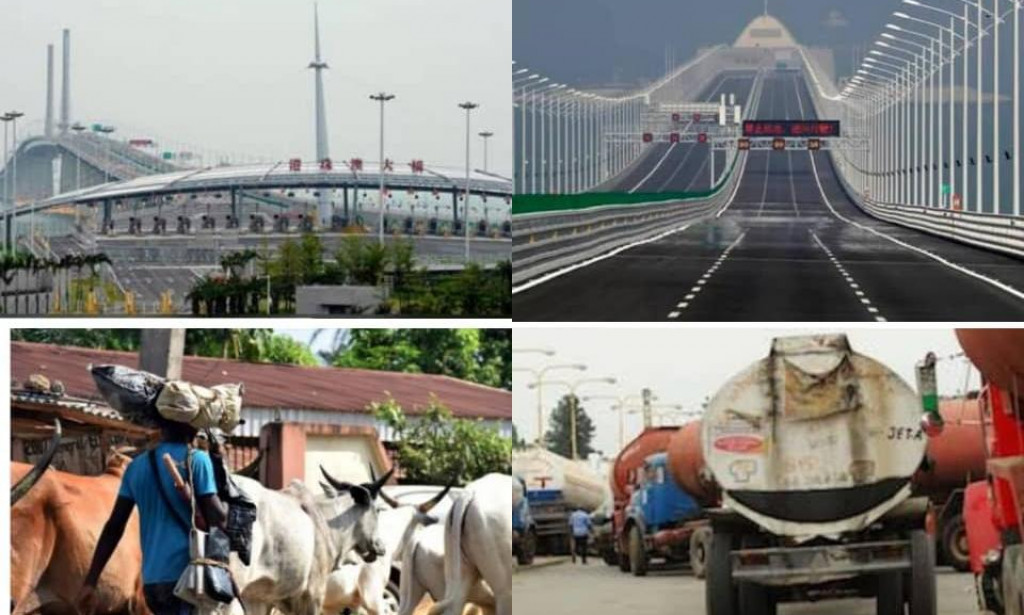
JUMBLED LEADERSHIP, JAUNDICED THOUGHTS: Contaminated Fuel for a Complacent Country -
By ‘Tunji Ajayi
I had almost concluded on my piece on a bizarre story for this week, when I ran into yet another more bizarre story which takes more prominence over the one I had almost concluded. Until perhaps a trainee journalist goes to the field to practice, whatever he learns within the confines of the lecture room remains mere academic postulations. The choice to write on the adulterated fuel recently imported has been largely influenced by the academic postulation on “run of the news”. News is relative to its reporter, his nature and idiosyncrasies; I recall a professor telling my class. True. But here I am largely influenced by the “run of the news” which refers to the profuseness at which events occur and their importance, thus calling for reportage in a social or geographical space within a spate of time. Nigerians are inundated with different bizarre stories and their varying versions every day. Like the prodigious music maestro King Sunny Ade, being confident of his own versatility would sing in his “10th Anniversary (1972): Ojúmó kan ìlù kan” – (New dawn, new musical creation) Nigeria also is adorned in new-day-new-bizarre-story toga.
But what makes the recent alleged importation of contaminated fuel into the country a bizarre story especially when we have had similar awry stories before? Such malfeasance is not new in Nigeria. For example in 1997, a large quantity of malodorous PMS motor spirit was allegedly imported into the country with the attendant health risk and fatal damages to automobile engines across the nation. It was reported that the Petroleum Products Marketing Company, then a subsidiary of the Nigerian National Petroleum Company (NNPC), in spite of earlier observation and prompt alarm raised by two major marketers, the PPMC still distributed the contaminated fuel to the market. PPMC was reported to have subsequently apologized to the public for its nefarious action.
Then came February 2008, when it was also widely reported that there was again the importation of a large quantity of gasoline suspected to have been adulterated with ethanol, and sufficiently large enough to have damaging effect on automobile engines. Nigerian car owners again suffered serious damages due to this infraction. According to Timeline, “ . . . The defunct Department of Petroleum Resources (DPR) passed the product despite regulatory tests and checks at the port — but did not test for ethanol, which is not part of the specification of Nigeria grade for gasoline. . . . We asked for the samples at load port to be retested for the ethanol level and on the 29th of February 2008, we were given a result of 20%. . . . The fact that the product contained a high content of ethanol was not reflected in the original certificate of quality issued at the load port nor was it revealed to us by the supplier prior to the 28th of February 2008.”
And here comes yet another importation of substandard fuel into the same country again! But when will Nigeria be penitent enough to learn from her past woes and make amends? The story merits our attention because in our modern time when the rest of the world is moving ahead into advanced technology in medicine, aeronautic science, breakthroughs in agriculture, artificial intelligence, etc., here we seem to be moving backward into the Stone Age every day. Like Oscar Wilde an Irish writer would say: “The taste of truth is acrid . . .” Yes. Those who tell brazen truths are often accused of lack of patriotism. Are self-serving praise singers more patriotic? But our consolation is that truth, no matter how hated often triumphs over falsehood. When will the country really move forward and shun primordial interests that lead a nation to nowhere? It is either Nigeria is vacillating for years, before making wise choice between stopping cattle from bulldozing their ways onto our expressway and airport tarmacs or embracing cattle ranching. It is either the presidency, in its typical manner of employing subterfuge in defense of primordial interests, wastes years sermonizing on ancient cattle colonies as solution to the herders and farmers clashes, or engaging the distraught citizens in hot debates on Ruga - an euphemism for cow settlements. Or provoking national discourse on her suspicious National Livestock Transformation Plan (NLTP), before emphatically insisting on the colonial grazing routes as the lasting “solution” to the menace of open grazing. Like Fela would sing in Perambulator: “If you look the man well, na the same place he dey. He no go anywhere.” The Presidency - or do we say the President -after dancing around the same circle, is consistently insistent on his decision by merely cunningly changing the name; but listening only to his own voice, there is hardly any regard to popular wishes. Till today there is no popularly accepted solution to grazing problem despite the time wasted, while killings still continue in many parts of the country.
In an edition of July 2, 2019 Vanguard, the paper had written: “It’s a monumental tragedy for Nigeria that our conversations in the last four years have mostly been about barbarism. At a time when even some African countries are making advancement in different areas of human endeavor, we have been bogged down with Miyetti Allah, cattle routes and grazing reserves. The herdsmen have become a serious menace in recent time and we have in the process lost thousands of precious lives in the hands of terrorists who use cattle as cover to inflict maximum harm on various communities in Nigeria.” While many years are being lost on a simple-issue-made-difficult due to selfish and ethnocentric primordial interests, the rest of the world moves ahead into achieving greater feats and noticeable development.
Let us look at this dastardly effect of our stagnation and engaging in macabre dance around trivialities. Up till mid 90s, China’s products were still being denigrated as inferior with the derogatory name “Chinko”. Hardly would anyone who reluctantly bought them, perhaps due to poverty, flaunt them. Indeed up till year 2000, their phones, laptop computers etc, were rebuffed. As Nigeria keeps herself busy for years arguing on what to do to her ravaging cattle, China is evidently thinking of other great inventions, and is busy improving her awe-inspiring technologies including her newly constructed world’s longest 55 km ocean-crossing bridge! The Hong Kong-Zhuhai-Macau Bridge with the awe inspiring infrastructure, which attests to the engineering might of the Chinese took only 8 years to construct. But Nigeria’s Lagos – Ibadan Expressway; a renovation project on land surface, has been on for almost 10 years and remains uncompleted.
The Hong Kong-Zhuhai -Macau Bridge costing $15bn - the longest ocean crossing bridge in the world - was aimed at reducing the hitherto journey time of 41/2 hours driving round the 168 km delta between the cities. The bridge, also with an under-ocean 6.7 km tunnel, connects the most densely 68 million population living around the delta to drive economic growth in the area. Nothing moves in a country where their leaders are perambulating and too busy to think out of the box. The British and Portuguese returned the colonies of Hong Kong and Macau to China just in 1997 and 1999 respectively! Thus the Chinese authorities brainstormed and explored the possibilities of linking both sides on the oceanic delta to drive economic growth and improve unity. The linkage also reduced congestion at their border checkpoints and cut down carbon emissions. On the Macau-Zhuhai side, it involves 22.9 km of elevated roadway and 3-cable state bridges before meeting a man-made island and entering a 6.7 km undersea tunnel. Travelers emerge from this tunnel unto another man-made island that links the 12 km of elevated roadway to Hong Kong. Hence, over 4,000 ships are able to cross the rivers’ delta daily. Its under-sea tunnel gap of 6.7 km width easily allows larger ships to pass through without having to navigate under or around bridges! That is a marvel of engineering technological creation of immense proportion! While these were on, Nigerian leaders were busy on political maneuvering and subterfuge, while the Giant of Africa, and unarguably the most religious nation in the world was busy keeping vigil and praying to God, but who ironically had already given her humongous resources to make any nation become the envy of the world. Nigeria is busier every day praying to God to bring her out of her self-made woes, while China, UK, USA, Japan, Indonesia, Dubai etc, where ironically the prayerful Nigerians and their impenitent leaders often run to find succor, move on into greater glory and sufficiency. While many other countries of the world are taking advantage of information technology to advance into higher and next stage of development, Nigerian leaders and administrators are either tracing the 1960 grazing routes for rampaging cattle to feed, or battling with over three decades of ritualistic strike threats of Academic Staff Union of Nigerian Universities (ASUU), or deliberating on whether to have own refinery or keep importing contaminated fuel into the country.
The second month of the New Year 2022 ushered in another awry story of importation of contaminated fuel into an oil rich country that can neither have and manage her own fuel refinery nor be able to import hazard-free PMS for her local consumption. The same problems of faulty importation keep occurring due to permissiveness, buck passing and care-free attitude towards opprobrious national disasters. In the first place, how did adulterated fuel get into the country, the same manner illegal weapons and fake drugs often get into the Nigerian market? Were there no pre-shipping and post-delivery quality-control and relevant checks on such multi-million dollar product purchases? We heard the authorities thanking God it had not caused any damage before the malfeasance was discovered? Is it really so, even when sudden sale stoppage had already caused panic buying and artificial scarcity? This has already resulted in long queues at the fuel stations and the resultant economy-impaired human-hour loss across the nation. Before singing Jubilante Deo, do the relevant authorities remember that every minute loss of economic activities and social interactions by millions of a working population in a given economy is a huge loss to it? It is because our system undermines the grave effects of endless strikes by the workforce that the government often breaches with impunity the agreements with the labour force. It is because the system underestimates the effects of self-employed commuters being held several hours daily in traffic that the government doesn’t see the urgent need to fix our pot-hole ridden roads. It is because the system hardly remembers that lack of regular electricity provision automatically results to idleness of her working population, and a disincentive to creative drives and ingenuity of our teeming youths on the streets, thus leading to restiveness and engagement in social vices. And this makes the system to vacillate and find excuses in fixing electricity problems for decades!
How does a nation with massive population like this sing “Jubilate Deo the fuel hasn’t caused damage” when most sick people somewhere across the nation being hurriedly taken to the hospital on emergency might have being stranded due to lack of fuel to transport them to the hospital; or lack of fuel to run the generator to perform surgical operations? Why is it being said “thank God it hadn’t caused any damage” before the contaminated fuel supply was withdrawn when some Nigerians somewhere would have been late, either to examination venues or job interviews and might have lost the opportunities to sit such examination or job interviews, either for getting stranded by the roadside due to lack of transportation or lateness to the venue of job interviews? For any little slack, the effect is always monumental in an economic and social system, especially of Nigeria’s status. And worse still what will be the irredeemable consequences, supposing adulterated aviation fuel was imported?
Our culture of silence and the penchant to sleep on our legal rights do not even help matters. It has given room for lack of accountability, buck passing and repeated misdemeanors. A serious institutional infraction would occur, and before a blink of an eye, the responsible institution or officers would pass buck and disclaim responsibility. In one fell swoop, the NNPC shifted the blame on a consortium of accredited importers. According to February 12, 2022 Premium Times “the Group Managing Director Mele Kyari on February 8, 2022 accused MRS, Emadeb/Hyde/AY Maikifi/Brittania-U Consortium, Oando and Duke Oil of importing the contaminated fuel.” However, “. . . MRS in a press statement published by Premium Times has claimed that the NNPC imported the fuel directly. The statement said NNPC is the sole supplier of all PMS in Nigeria.” But how reliable is the promise that the government would pay compensation to those affected with the importation of the adulterated fuel? Who really committed these grave infractions, and whose funds would be dispensed towards the payment of such compensation? Is it not a case of “A n f’owò Àbú s’Àbú lálejò” that is, spending Abu’s funds to host him to a sumptuous meal. Is it not the huge tax payers’ money that would still be spent on an avoided calamity that doesn’t fall within the legal ambit of “force majeure”.
If in law, whatever the Agent does is presumed to have been done by the Principal, save for few exceptions enunciated in the maxim: “Qui facit per alium facit per se”, does NNPC’s blame-shifting on the marketers appointed to act on its behalf totally absolve NNPC from blame, when the company was not restricted from proper oversight through regulatory tests and checks before importation and distribution.
Nigerians naturally but painfully love to sleep on their rights, by trivializing grave issues, while always latching on “Aà ní rí’rú è mó” (may we never witness this problem again) prayer, rather than seek legal redress. This has not encouraged responsibility on the part of our leaders. It has also made our laws tenuous and ineffective, since their potency is hardly tested in the approved court of law. Should electricity company supply high voltage current resulting in an inferno that razes down a whole building, the victims will just chant: “Aà ní rí’rú è mó” andfind an internally displaced (IDP) camp to settle. It is evident that there is an act of omission on the part of the NNPC, in violation of the rights of Nigerians to have unadulterated products at all times. Acting in the contrary seems a violation of their legal rights. Thus, by the legal principal encapsulated in the maxim “injuria sine damnum” there seem to have been injuries suffered arising from the negligence of NNPC giving rise to legal remedies. Perhaps, when we start realizing that it is not enough to be aware of one’s rights under the law, but to rise up and defend them when they are being trampled upon, then our society will become a better place. After all, like English philosopher John Locke said in his Two Treatises of Government; “Wherever law ends, tyranny begins.” Verbum Satis Sapienti.
……………………………………………
N.B: Amazon.com bumper promo on the new Book: “KING SUNNY ADE THE LEGEND! – Cultural Values & Philosophies Behind a Genre of African Music” – a whopping 54% off the $95.00 Cover Price to buy @ $43.70 for personal & academic libraries, culture & tourism depts. worldwide, great fans, music buffs etc. Get your copy via: https://amzn.to/3FD5fi3
……………………………………………..
*Tunji Ajayi, a creative writer, author, biographer and audiovisual documentary producer writes from LC-Studio Communications, Nigeria (+2348033203115, +2348162124412) Facebook: https://www.facebook.com/tunji.ajayi.946

You must be logged in to post a comment.