
Upon gaining independence from Great Britain in 1966. The southern African country of Botswana was the second poorest country in the entire world despite occupying a territory about the same size as Spain. There was a grand total of just 12 kilometers of paved roads in the entire country. There were no hospitals and no universities and the vast majority of his people were illiterate even within the small educated population only 22 people had attended University and only about 100 more had graduated high school the country had a no formal economy and most of its citizens depended on cattle herding and subsistence farming as their only source of income but fast forward five decades later and Botswana now stands apart as one of the most remarkable Economic Development success stories.
Botswana today is the world's largest producer gem diamonds and is one of only a handful of middle-income countries in sub-Saharan Africa Botswana GDP per capital was recently estimated at just over $18,500 placing it on par with countries like Mexico and turkey and above Brazil and Iran. In the most recent Transparency International corruption perception index Botswana was ranked as the least corrupt country in Africa posting a better score than South Korea, Italy and China.
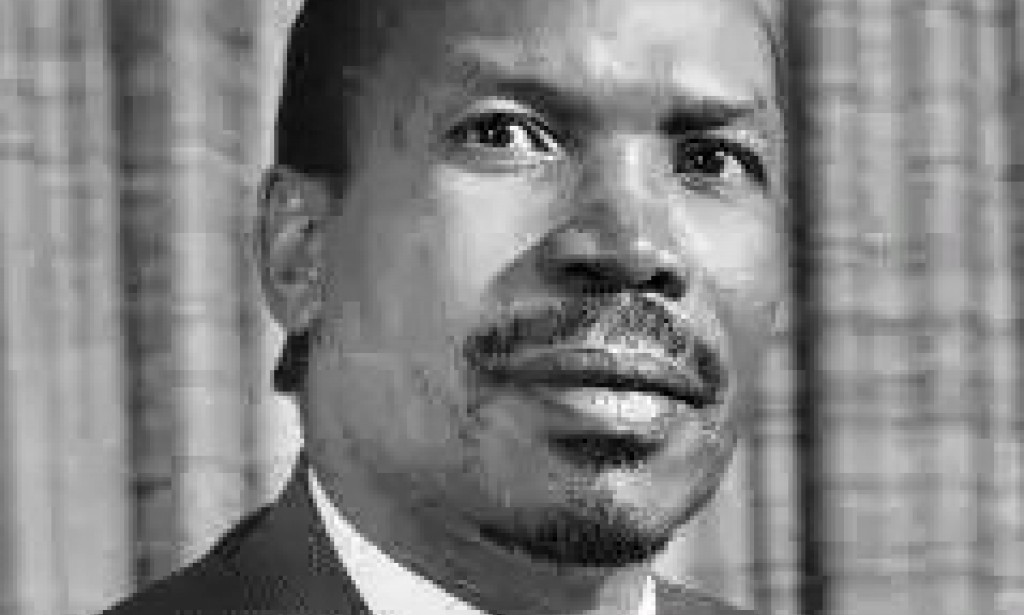
Botswana is also Africa's longest running multiparty democracy and it's one of the most tolerant and peaceful countries in Africa. Although that's a long list of reasons why Botswana has been so successful. One of the most important factors was the Visionary leadership of its first president Sir Seretse Khama the Botswana leader portrayed by British Nigerian actor David oyelowo in the 2016 film A United Kingdom.
Born as the heir to the Throne of the most powerful royal family in what was then known as the British protectorate of Botswana land. Seretse Kharma shot to International Fame following the public controversy that surrounded his marriage to his English wife Ruth Williams. The marriage was rejected both at home and abroad. Firstly by Khama's own family and secondly by the apartheid promoting government of the Union of South Africa which share the border with Botswana land, you see unlike countries like Ghana, Kenya and Nigeria. Botswana land was a British protectorate and not a British colony which meant that it was technically still led by the native Botswana land rulers as opposed to the British crown and so by going against his family's wishes Seretse Khama was putting his political future at serious risk.
Now, although most of Khama's kingsmen eventually grew to accept the marriage the geopolitical blowback would prove a lot more difficult to resolve. Having banned interracial marriages in 1949, the South African government was Seriously opposed to having an interracial couple holding such an important position in a large country right across the northern border taking Swift action, the South African government bans Seretse and his wife Ruth from setting foot on South African territory the ban also extended to the city of Mafikeng, which at the time served as the administrative capital of Botswana land.
The South Africans also petitioned the British government to strips Seretse Kharma of his Birthright to become the chief of one of Botswana land most influential tribes and with the labor late government of prime minister Clement Atlee heavily in death following World War II British cannot afford to risk breaking his relationship with South Africa, which was his primary source of cheap gold and uranium and so despite being heavily criticized by various pressure groups the British government conducted a Judicial inquiry which ultimately concluded that Karma would have been perfectly fit for leadership. But for is unfortunate marriage, Kharma and his wife within subsequently exile from Botswana land In 1951.
In 1956 However, the couple was allowed to return to Botswana land as normal citizens after Seretse Kharma renounced the throne. Kharma subsequently returned to politics in 1961, when he set up the Botswana land Democratic party. His exile and reannouncement of the throne had raised his profile among regular people and he was elected prime minister of Botswana land following a landslide Victory in 1965.
As prime minister, Khama led the push for his nation's Independence and on 30th of September 1966, Botswana land became the independent republic of Botswana with Sir Seretsi Khama as Its first president, With his newly independent nation desperately poor and lacking basic amenities Khama immediately got to work on what would ultimately go down as one of the most impressive economic transformation programs in modern African history. Khama's plan to transform Botswana was based on building an economy powered by the country's three main resources, which were cattle, copper and diamonds and while many other newly independent African governments would go on to see the resources become more of a A curse than a blessing due to greed corruption a tribal infighting, Khama government would be an exception to the general rule.
In addition to implementing a very strong judicial and legislative system with effective checks and balances, Seretse Khama economic policys could run contrary to masses consing among most of Africa newly independent states such as kwame nkrumah Ghana, his administration would put pragmatism over ideology adopting business friendly policies such as low corporate and income taxes and low import tariffs and although he share the border with the openly racist regime of South Africa and Rhodesia.Khama was determined to build a nation where merits and content of character as opposed to skin color would be the primary determining factor for achievement and opportunity despite facing considerable political pressure to forcefully replace all foreign members of the Civil Service with native born citizens regardless of the skill level.
Khama's government stated numerous times that he would continue to employ foreign workers until the local population was sufficiently well educated and skilled to compete for the same jobs. Khama also employs several policy consultants and invited foreign mining companies to search his soil for more resources. This would lead to significant increase in a government's income as additional copper, nickel and coal deposits were discovered.
In 1969 the government of Botswana enter into a partnership agreement with a De Beers mining company setting up a joint venture known today as the Debswana mining company over the next five years the government of Botswana increased its shareholding in the company from 15% to a full 50% and it's also reported to have negotiated a profit-sharing agreement in which the government got 70% of the profit on every $1 in sales of Botswana's Diamonds.
By the mid-1970s Botswana was making so much money from his mining industry that the government was running at a budget surplus and between the years or 1960 and 1980, Botswana was recorded as the fastest growing economy in the entire world and thanks to a sufficient a relatively corruption-free Civil Service.
The Khama administrations successfully invested its income into building the country's infrastructure and setting up free hospitals, public schools and universities. in order to boost his meat industry the government provided subsidy to cattle Farmers to build slaughterhouses subsidized treatment for livestock and constructed cattle ranches. The Botswana meat commission was also created as a source seller of beef in the country, responsible for setting prices and selling beef to the regional and international markets.
Khama was also personally involved in negotiating a trade deal with the European Economic Community which allowed Botswana to export beef to Europe at a price far higher than the world average. As His primary focus was an economic development, Botswana initially only devoted a small proportion of his National budget to military spending.
However, following repeated threats of intrusion by South Africa and Rhodesia enforces. The Botswana Defence force was formed in 1977 to serve as a country's primary defense unit. Botswana's foreign policy was always to stake a new draw and only exert military force in self-defense.
Seretse Kharma would nevertheless play a major role in the negotiations are the end of the Rhodesian Bush War and the creation of the independent nation of Zimbabwe. He was also instrumental in the creation of the Southern African development coordination conference, which later evolved into the southern African development community, which is the leading intergovernmental organization working to boost economic cooperation among 16 African countries in southern Africa.
Khama's government would be hugely popular in Botswana and his Botswana Democratic party would go on to win three elections in 1969,1974 and 1979.
However, this strong stable leadership would be tragically cut short as less than a year after winning his third election he was diagnosed with pancreatic cancer and on the 13th of July 1980 Sir Seretse Khama died in office and also exceeded by its vice president Quett Masire, over 40,000 people turned out to pay their final respects as his body was laid in the country's capital of Gaborone, but even in death Karma's Legacy continued past 20 years after the tragic end of his leadership his son Ian Khama was elected in a landslide Victory as a fourth president of Botswana and would go on to enjoy a successful 10-year term as the country's leader.
Although his achievements may never get the same level of recognition as other popular African leaders such as Nigeria Abubakar Tafawa Balewa. South Africa's Nelson Mandela. Ghana's Kwame Nkrumah or Burkina Faso's Thomas Sankara.
Sir, Seretse Khama will forever be recognized as celebrated by the people of Botswana as one of the best Statesmen the continent has ever produced.
You must be logged in to post a comment.