
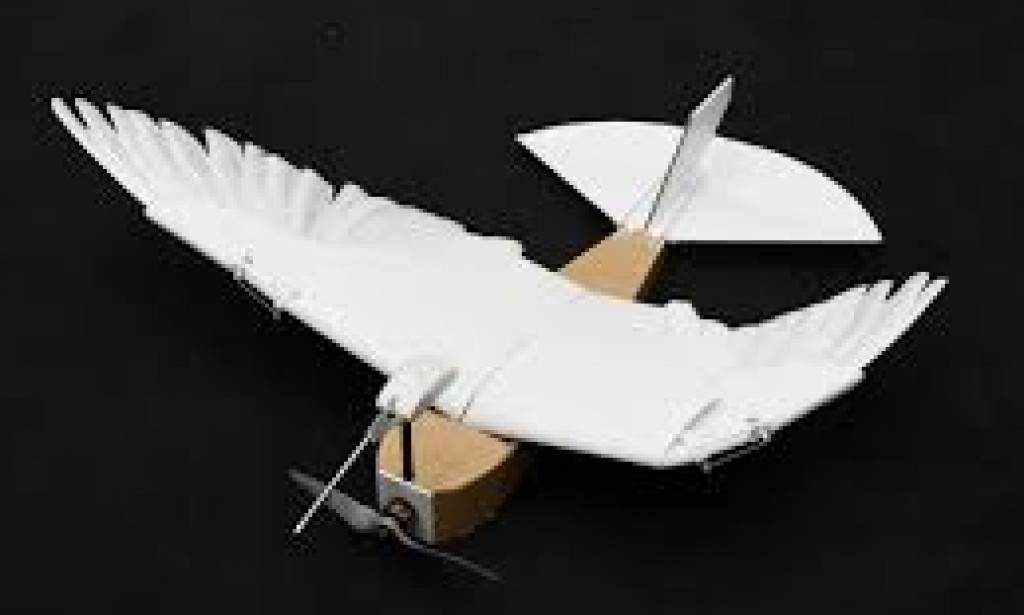
A robot that flies deftly and makes sharp turns mid-air like a real bird may signal a new age of aircraft design and engineering.
Researchers at Stanford University built a drone named PigeonBot that has wings covered in real pigeon feathers. To make the drone, scientist's studied the wing of a pigeon cadaver. They then built the robot's wings covered in 40 pigeon feathers each, just like in the wing of a live pigeon. The feathers were connected using artificial wrists and fingers using synthetic elastic ligaments.
Birds can control changes in the shape of their wings without having to control each individual feather. By adjusting the wrists and fingers, they found they could change pitch of all flight feathers, enabling the robot to make tight turns like a real bird.
David Lentink, the lead author of a paper about the project said, they decided to use real pigeon feathers because they have certain molecules embedded in them that reduces the level of individual feather control required for accurate flight. No synthetic material has this characteristic, in addition to lightness and firmness properties to carry the aerodynamic load of the robot. The propeller powered robot flies at an average speed of 25 miles per hour and can be controlled remotely. The success of the project may inspire future development of continuously morphing wings by aerospace companies.

You must be logged in to post a comment.