
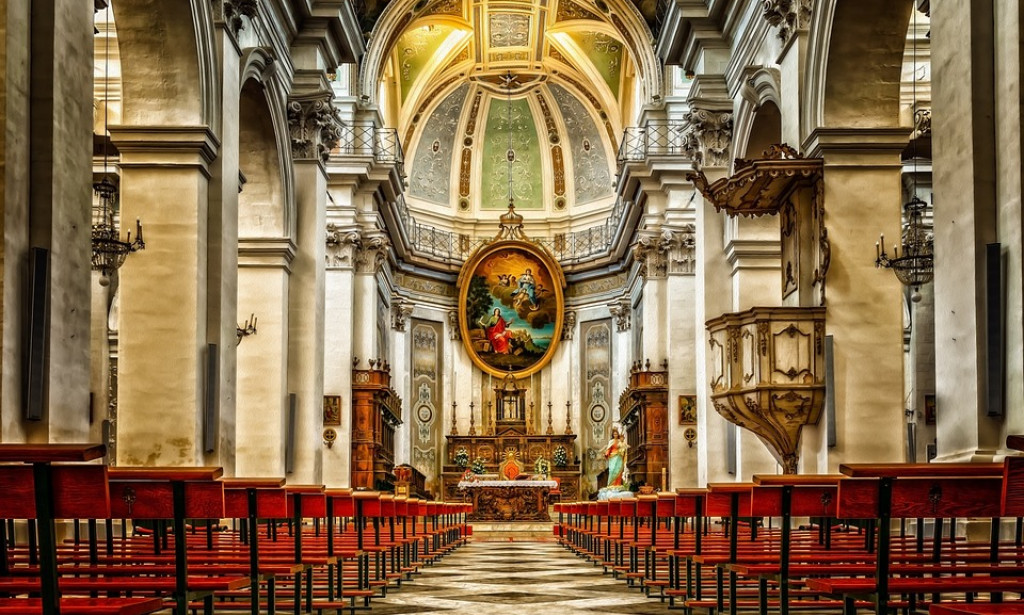
The results of the census conducted in 2021 by the Office of National Statistics showed that England and Wales are no longer countries that are mostly Christian. The statistics, which was released on Tuesday, indicates that the percentage of people in the United Kingdom who identify as Christians has dropped to 46.2%, down from 59.3% in 2011. Over the course of the last decade, the number of people who identify as Christians has fallen from 33.3 million to 27.5 million.
At the same time, the membership of all other types of religious organisations, including the "no religion" category, has increased. The percentage of citizens who identified as having no religious affiliation rose from 25.2% in 2011 to 37.2% in 2017, signifying an increase of 8.1 million individuals from the previous year.
Muslims witnessed the second highest rise, increasing from 4.9% of the population to 6.5% of the population, while the proportion of Hindu inhabitants climbed from 1.5% to 1.7%, reaching one million for the first time. Both of these groups saw their populations expand. Sikhs, Buddhists, and Jews all had more moderate growth, as did those who classified their faith as "other." Despite this, there were much fewer respondents who refused to answer in 2021 (7.1% vs. 6%) than there were in 2011.
Some others hailed the change in demographics as an indication of success and asked the government to make an effort to keep up with it. The Chief Executive Officer of the National Secular Society, Stephen Evans, was quoted in The Guardian as saying, "The existing status quo, in which the Church of England is profoundly established in the UK state, is unjust and undemocratic - and looks more ludicrous and unsustainable."
On the other hand, some prominent Christians saw the movement's waning popularity as a sign that it was simply time for them to put in more effort. Stephen Cottrell, the Archbishop of York, was quoted as saying that the census "throws down a challenge to us not just to believe that God will develop his kingdom on Earth but also to perform our role in making Christ known."
The census taken in 2021 found that 81.7% of people living in England and Wales described themselves as "white." However, this percentage has also decreased over the course of the preceding decade, falling from 86% in 2011 to 81.7% in 2021. The group that came in second place, Asian Britons, had their representation rise from 7.5% to 9.3%, while the percentage of people who identified as any sort of black or African rose from 1.8% to 2.5%. More over half of the people living in Leicester, Luton, and Birmingham are members of a minority ethnicity, while slightly under two thirds of the people living in London are from a minority ethnicity.
In the last ten years, there has been a discernible change in the way a nation views itself. Although only 19.1% of inhabitants identified as speaking "British exclusively" in 2011, that number had increased to 54.8% by 2021. This increase came entirely at the cost of those who claimed to speak "English only," whose percentage dropped from 57.7% to 14.9% over the same time period.

You must be logged in to post a comment.