
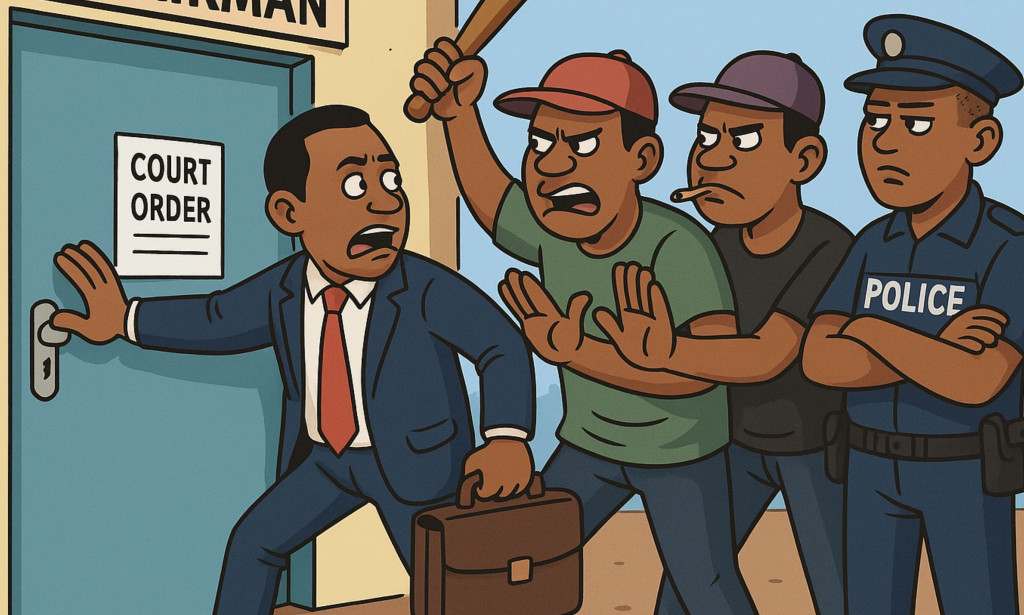
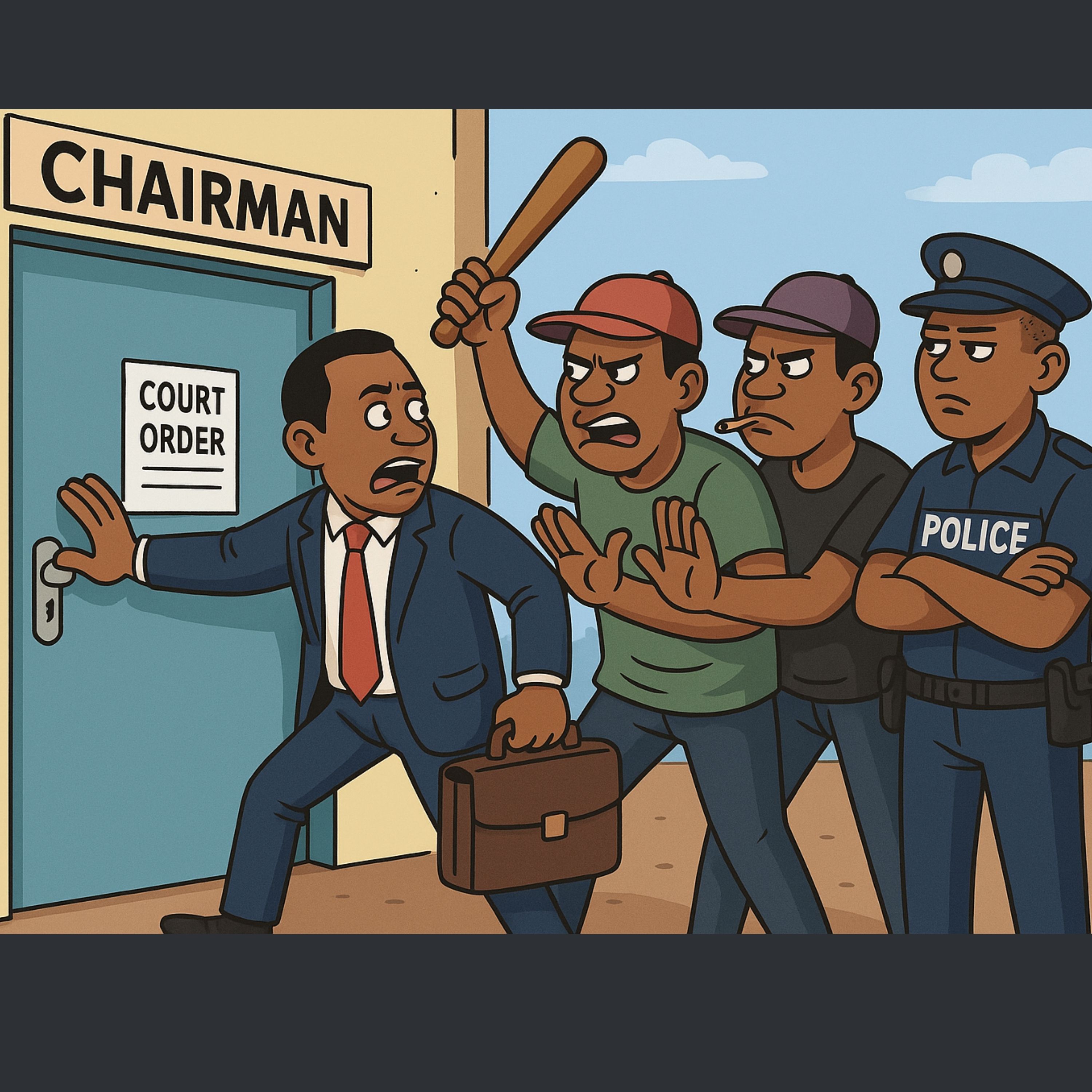
The December 20, 2024 court order was unequivocal: all 18 suspended local government chairmen in Edo State must be immediately reinstated to their positions. Yet seven months later, armed thugs continue to block elected officials from their offices while uniformed police officers stand by and watch—a damning indictment of how law enforcement has become a partisan tool rather than a guardian of constitutional order.
This crisis represents far more than a local political dispute. It strikes at the heart of Nigeria's democratic foundations, where the police force tasked with upholding the rule of law has instead chosen political allegiance over constitutional duty. The systematic failure to enforce multiple court orders in Edo State reveals how deeply partisan politics has corrupted law enforcement, transforming officers sworn to protect democracy into agents of its destruction.
Courts speak, police ignore
The pattern of judicial defiance began almost immediately after Justice Efe Ikponmwonba's landmark ruling on December 20, 2024. The Edo State High Court granted a mandatory injunction compelling the immediate reinstatement of all suspended chairmen and explicitly restrained Governor Monday Okpebholo's administration from acting on the Edo State House of Assembly's suspension resolution. This wasn't merely a suggestion—it was a binding legal order backed by the full authority of Nigeria's judicial system.
Three days later, the consequences of police inaction became starkly apparent. On December 23, when Dr. Tom Obaseki attempted to resume his duties as Oredo Local Government Chairman, he encountered what he described as "a whole lot of thugs who have already overtaken the council." These weren't shadowy figures operating under cover of darkness—they were armed individuals "chanting war songs" in broad daylight at a government facility. Most disturbingly, uniformed police officers were present at the scene but took no action to enforce the court order or arrest those illegally occupying the premises.
The situation at Etsako West Local Government painted an even more troubling picture. When Chairman Marvellous Zibiri attempted to access his office, he found the secretariat shut down by suspected thugs. Council workers were literally forced to conduct their duties "under the trees outside the secretariat" while the building remained under illegal occupation. A council worker, speaking anonymously for fear of reprisal, provided damning testimony: "A police van was seen positioned at the entrance to the council... The police officers at the scene stood aloof and seemed to be uninterested in what was going on within the council."
Constitutional betrayal at every level
These aren't isolated incidents but part of a systematic pattern of constitutional violations that should alarm every Nigerian who values democratic governance. Section 287 of the 1999 Constitution explicitly mandates that court decisions "shall be enforced by all authorities and persons" throughout Nigeria. There's no ambiguity here—the word "shall" creates an absolute obligation, not a discretionary choice based on political convenience.
The Police Act 2020 reinforces this duty, defining police responsibilities to include "enforcement of laws and regulations" and "protection of rights, lives and properties." When police officers witness armed thugs preventing democratically elected officials from exercising their constitutional duties, their failure to act constitutes both dereliction of duty and contempt of court. Every officer who stands idle while court orders are flouted becomes complicit in undermining the very democracy they swore to protect.
The legal framework couldn't be clearer. The Supreme Court's historic July 11, 2024 judgment in Attorney General of the Federation v. 36 States definitively established local government autonomy as a constitutional imperative. Justice Emmanuel Agim's ruling affirmed that local governments constitute the third tier of government with constitutional protection against state interference. This wasn't a minor procedural ruling—it was a fundamental reaffirmation of Nigeria's federal structure.
Pattern of selective enforcement exposes partisan agenda
The evidence of police partisanship becomes undeniable when examining their selective enforcement patterns. When Governor Okpebholo's administration needs LG secretariats sealed or "acting chairmen" protected, police spring into action with remarkable efficiency. Yet when democratically elected chairmen with valid court orders seek to resume their duties, the same police force suddenly becomes paralyzed by inaction.
This selective blindness reached its nadir in March 2025 when the Onogie of Ewu petitioned the new Commissioner of Police about his predecessor's refusal to provide police escorts for court bailiffs executing a Supreme Court judgment. The former CP claimed the "road to Ewu was blocked"—a constitutionally inadequate excuse that wouldn't be accepted from a junior constable, much less a senior commander. When police commissioners openly refuse to enforce Supreme Court orders, the rule of law doesn't just bend—it breaks.
The Concerned Civil Society Organizations in Edo State documented this pattern extensively, formally petitioning Inspector General of Police Kayode Egbetokun about the "collusion" and "compromise" between police and violent elements. Their plea that the "Edo State Commissioner of Police must wake up as a matter of urgency" fell on deaf ears. Instead of protection for elected officials, we see police vehicles positioned strategically at council secretariats—not to enforce court orders, but to facilitate their violation.
Political roots of a constitutional crisis
Understanding why police have abandoned their constitutional duty requires examining the political dynamics at play. When APC Governor Monday Okpebholo assumed office in November 2024, he inherited 18 local government councils controlled by the opposition PDP. Within weeks, citing alleged financial irregularities, the governor orchestrated their suspension through the State House of Assembly on December 17, 2024—a move immediately condemned by Federal Attorney General Lateef Fagbemi as "illegal and unconstitutional."
The governor's administration claimed to have uncovered N96 billion in mismanaged funds, yet notably failed to pursue criminal prosecutions if such massive fraud truly occurred. Instead, they opted for political suspension—a tactic that bypasses due process and judicial oversight. When allegations of financial crimes become tools for political elimination rather than subjects for criminal investigation, the justice system itself becomes corrupted.
Even more telling is the state government's response to federal intervention. When AGF Fagbemi declared that "no governor has the right to remove any local government chairman," state officials brazenly argued that financial autonomy doesn't mean freedom from state control. This fundamental misreading of constitutional law—or deliberate misrepresentation—reveals an administration more interested in political dominance than legal compliance.
National pattern demands federal intervention
Edo State's crisis mirrors similar breakdowns across Nigeria, particularly in Rivers State where police demonstrated the same selective enforcement based on political alignment. The comparative analysis reveals a disturbing national trend: police forces consistently favor whichever political faction aligns with federal power structures, regardless of court orders or constitutional provisions.
In Rivers State, police readily withdrew from election security when federal courts ordered it, yet failed to prevent post-election violence by political thugs. In Imo State, police facilitated state government takeovers while resisting court-ordered reinstatements. This pattern exposes a fundamental truth: Nigeria's police force has become an extension of political power rather than an independent law enforcement institution.
International observers have documented this systemic failure extensively. Human Rights Watch's reports describe police as "partisan tools" while the U.S. State Department notes that "civilian authorities did not always maintain effective control over security services." When foreign observers can clearly see what Nigerian authorities refuse to acknowledge, it becomes evident that the problem isn't lack of awareness but absence of political will.
Rule of law hangs in the balance
The implications of continued police partisanship extend far beyond Edo State's local government crisis. When law enforcement openly defies court orders based on political calculations, it creates a cascading failure of democratic institutions. Citizens lose faith in the judiciary when its orders become meaningless papers. Electoral democracy becomes a sham when winners can be removed through partisan manipulation rather than legal process. Most critically, the Constitution itself becomes a dead letter when those sworn to uphold it choose political loyalty over legal duty.
The damage compounds when considering the Supreme Court's landmark local government autonomy ruling. This wasn't merely another judicial decision—it represented a fundamental restructuring of Nigeria's federal system to ensure grassroots democratic governance. When police refuse to enforce this ruling in Edo State, they're not just defying a court order; they're actively undermining a constitutional revolution intended to bring democracy closer to the people.
Former Governor Godwin Obaseki captured the stakes precisely when he noted that these elected chairmen "have a better claim to their democratic office" than those who would remove them through unconstitutional means. Every day that police allow thugs to occupy council secretariats while elected officials work under trees is another day that Nigerian democracy retreats from its constitutional promises.
Immediate action required
The path forward demands immediate and decisive action. First, the Inspector General of Police must personally intervene to ensure enforcement of all outstanding court orders in Edo State. This cannot be delegated or delayed—every additional day of non-compliance deepens the constitutional crisis and emboldens those who would place political power above law.
Second, officers who have failed to enforce court orders must face disciplinary proceedings. The police officers who stood "aloof and uninterested" while thugs occupied government buildings weren't merely negligent—they actively participated in subverting constitutional order through their deliberate inaction. Accountability must flow from the Commissioner who refused to provide court bailiff escorts down to the constables who watched democracy being strangled.
Third, the federal government must move beyond statements to concrete action. When the Attorney General declares state actions "illegal and unconstitutional," those words must be backed by enforcement mechanisms. Contempt of court proceedings should commence immediately against all officials—police and civilian—who continue defying judicial orders.
Finally, civil society organizations and citizens must recognize this crisis as an existential threat to Nigerian democracy. The Concerned Civil Society Organizations' warning about "legitimate resistance" reflects growing frustration with institutional failures. When peaceful, legal channels for democratic participation are blocked by partisan police, society itself begins to fracture.
Democracy's defining moment
Nigeria stands at a crossroads. Either the rule of law prevails and court orders are enforced regardless of political considerations, or the country slides further into a system where might makes right and democratic institutions exist only as hollow facades. The police force's response to Edo State's local government crisis will reveal which path the nation chooses.
The 18 suspended chairmen represent more than individual political careers—they embody the principle that democratic mandates cannot be revoked through partisan manipulation. Every police officer who refuses to enforce their reinstatement chips away at the foundation of constitutional governance. Conversely, every officer who upholds their oath by enforcing court orders, regardless of political pressure, becomes a guardian of Nigerian democracy.
The time for excuses has passed. Roads cannot be too blocked to enforce Supreme Court orders. Political calculations cannot override constitutional duties. The presence of thugs cannot excuse police inaction when the law is clear. Either Nigeria is a nation governed by law where court orders carry the full force of state power, or it is a failed state where political violence determines who holds office.
History will judge harshly those who chose political expedience over constitutional duty during this critical moment. But history will also remember those who stood firm, who enforced the law without fear or favor, who recognized that democracy's survival depends on institutions that place principle above politics. The question for every police officer, from the Inspector General to the newest recruit, is simple: Which side of history will you choose?
The people of Edo State—and indeed all Nigerians—deserve police officers who protect democracy rather than undermine it, who enforce court orders rather than political vendettas, who remember that their ultimate loyalty is to the Constitution, not to whoever temporarily holds political power. Until that happens, every illegally occupied council secretariat stands as a monument to the betrayal of Nigeria's democratic promise.

You must be logged in to post a comment.