
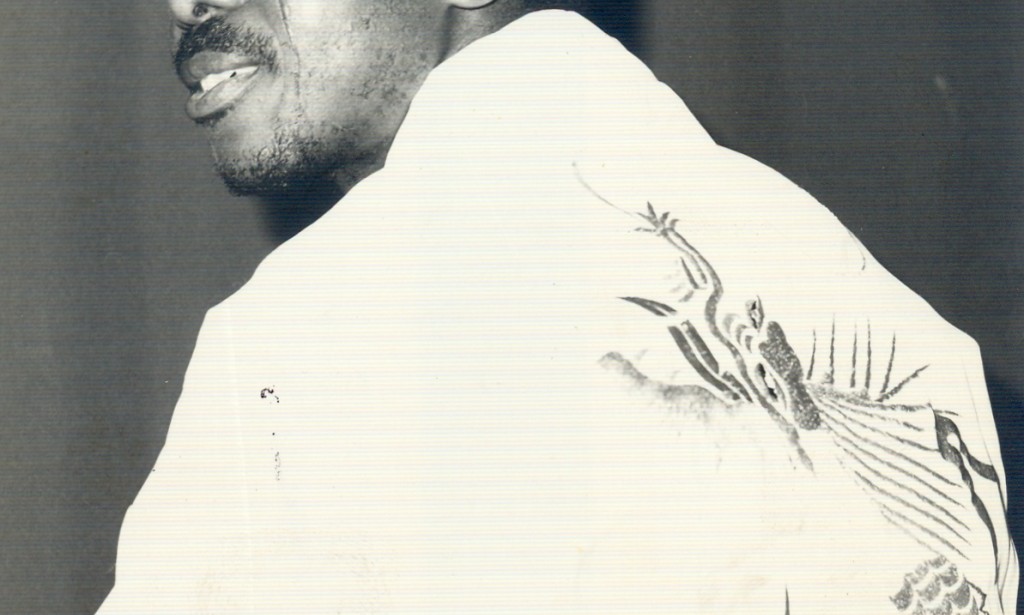
AN ODE TO KSA THE SAGE (I) (Hypnosis 10)
Essays On The Mystique Of KSA The Sage
By Tunji Ajayi
Many great men of our time live on good music. Most great men in the past stirred up their souls with it. Edward Heath, the former British Prime Minister never toyed with the opium. He became a spare-time organist and music conductor. Harry Truman once ruled one of the most powerful nations in the world, the United States of America. He took time off to play the piano. Richard Nixon, the great former United States President loved melodies. He cherished playing his piano far more than his ever-sumptuous meals.
Good music makes the world spin round. Meaningful lyrics embedded in fine melodies and perfectly synchronized rhythms soothe strained nerves, douse boredom and dissipate lassitude. Fine andante music has therapeutic effects on our psyche and nerves. So do jazzy lullabies. I remember the biblical King Saul whose depression defied every other therapy until he listened to good music from the young and intelligent David before he got cured of a soul-devastating depression. Yes, fine music has a therapeutic value. And fine music rendition belongs only to the intelligentsia.
I remember Michael Norman Manley of Jamaica who had an army of opposition to fight before he could become the country’s Prime Minister. The legendary Bob Nesta Marley, the musician-cum-philosopher knew what stiff opposition could do in stalling Norman Manley’s political ambitions. Bob Marley used his potent weapon - music, to unite the warring parties. He sang about the need for peace, unity and love around the four walls of Jamaica; and all friends and foes alike thereafter saw the need to unite and wine and dine together. The great musician Bob Marley saved Norman Manley the politician from the destructive claws of the opposition with his music. Music can foster unity and it might as well do otherwise. Good music does many wonders.
An impresario and music ambassador has, for many decades now, sang meaningful music to our delight, and to the delight of Kings and Emperors on their thrones; the peasants in their ghettoes, and the rest of the world. He goes by a well-deserved and soothing sobriquet, KSA - King Sunny Ade, the icon of music and the leader of the effervescent African Beats of Nigeria. We all know that the church pulpit always stands tall in the forefront, towering higher above the congregation, and so the great KSA towers above his contemporaries like a colossus.
For the past five decades of active musical career, King Sunny Ade has combined effectively his leviathan strength with Solomonic intelligence, culminating in acquisition of a huge reservoir of innovative ideas in the entertainment world. In the 70’s, the finesse with which he rendered his musical compositions, relished and embellished with thought-provoking philosophical lyrics in many of his records belied his youthful age then; an indication that there were great fortunes ahead of the young but witty musical icon.
It is worthy of note that even at his youthful age at the African Songs Ltd., the recording company where he began his soul-stirring exploits, every release of the then young but versatile Sunny Ade had some distinguishing features, marking it from the others. None of his albums ever bore similarities with another in terms of lyrical compositions and dexterous use of instruments, thus, showing his versatility and abysmal depth of knowledge in composing and arranging songs with powerful messages to the admiration of his old and young fans.
In LPAS 8007 - Ilé làbò sinmi oko, LPAS 8020 - Ògún, and AS1-L - Af'àì bá won jà, Sunny Ade successfully causes the adrenaline to flow through the entire body system by his highly evocative philosophical lyrics, carefully backed by the copious guitar fireworks, sounding like women’s chattering voices engaging in severe bickering and endless arguments.
In Af'àì bá won jà especially, Sunny Ade squeezes the tone out of his guitar and coerces it to create distress call and weeping effects. An inexplicable and inimitable act, the secret of which is only known to Sunny Ade himself; and the feat which must have impressed the likes of the ace guitarist Aston Barret, the “family man” of Bob Marley and the Wailers fame, and Jimi Hendrix, another world great guitarist of our generation.
The AS 26-L, Vol. 12 - Synchro System has every characteristic of an andante with soothing philosophical lyrics, synchronized with an unceasing bass guitar rhythms, thus creating a lulling effect in the sensory nerves. The AS 15-L - Sùnny Ti Dé is unique for its flamboyant display of the artiste’s wizardry. The musical package reflects his enormous level of dexterity on the application of both the traditional and westernized musical instruments.
And for Sunny Ade to have composed, arranged and packaged the SALPS 1, Vol. 1 - E kìlò f’ómo ode, and the SALPS 3 Vol. 2 - Apala Synchro at the most turbulent and soul-devastating period of his musical career manifested his manly courage. It also showed his determination to succeed in the face of all odds, and a strong belief that Providence would bring him fortunes in his well-chosen career if he demonstrated fortitude and forbearance. Both records possess many unique features. They are records on which the passage of time has no effect. They do not suffer the pang of obsolescence. They continue to look and sound new every day like latest releases.
King Sunny Ade, a pride to the black race, personifies knowledge and initiatives; energy and drive; dynamism and optimism; industry and philanthropy. An astute administrator and indefatigable manager of human and material resources. A strong believer in originality who has single-handedly titillated the world with the beauty of Nigeria’s musical culture. He introduced the Keyboard, Synthesizer, Hawaiian steel guitar, electric drums, etc., into his genre of music – the juju music - even to the delight of the western world, where millions of his fans always become frenzied, ecstatic and joyous while watching his live performances.
During his Europe-94 Concert Tours, KSA created waves and sensation throughout the length and breadth of Europe with his breath-taking showmanship. He danced skillfully to his own rhythmic beats, spinning round with vigour and agility of a tiger, typical of the maverick Michael Jackson’s electrifying dancing steps, which made his hypnotized audience over-joyous, culminating in yelping, and weeping - the antithesis and zenith point of joy.
Indeed, while talking about KSA’s bizarre exploits and the revolutionary changes he has single-handedly caused in the juju musical world, a frontline Europe-based music analyst, Henry Kaiser in an edition of Current Biography, a New York magazine, commented that: “KSA has revolutionized the juju guitar sound by working with a front-line of several guitarists and by incorporating a Hawaiian Steel Guitar as a lead instrument. He has also introduced the Vibraphone into juju, electrified the talking drum, a lead instrument in its own right and appropriated the common western recording techniques of re-mixing songs on multi-track tape recorder to emphasize certain instrumental passages other than relying on the band itself to produce the desired effects.”
**But why did I surmise earlier on that KSA’s music has developed over the years to have 3 distinct values: viz: Descriptive value, Predictive value, Prescriptive value? Let’s meet here next Saturday in Hypnosis11
-------------------------------------------------------------------------------------------
*Tunji Ajayi, a Biographer, Creative writer and Audio-visual Documentary producer writes from Lagos, Nigeria.

You must be logged in to post a comment.