
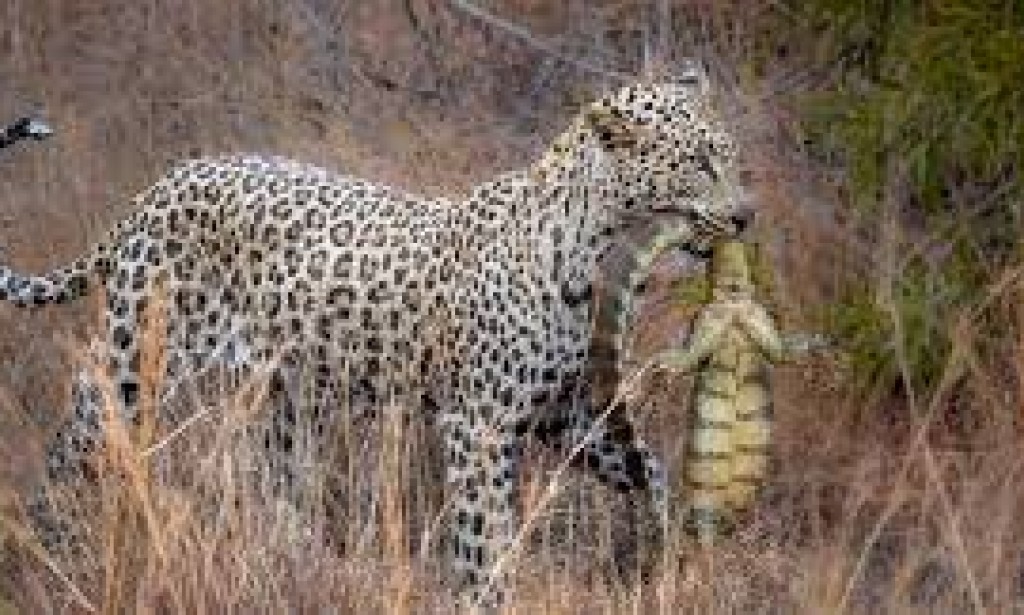
In Africa, the Yorubas that inhabit the western part of Nigeria, the species of animals that look like or related to leopard, the tiger, the cheetah, the panther and the jaguar are referred to as Àmò. Àmòtékùn is the name adopted by the western Nigeria security network as the operation code which is a powerful symbol as regard to Yoruba land security as well as Africa, due to its unique characteristics both in the jungle and when it attacks the town or villages in the past. It does not even have anything to do with the saying about leopard protecting the land in bible.
The leopards or leopardesses are lone rangers, they attack alone, unlike the lions that are mostly in groups claiming territories. Although, the lion attacks any animal whereas the leopard might be selective.
In the art of different kingdoms in Africa, for example; the Benin kingdom and Oyo empire, there arts made centuries ago symbolising the power of the leopard, since its considered king of the forest thereby used as symbol for the king. The Benin in particular have water vessel shaped like a leopard as explained on wikipedia.
The Yoruba have a lot of saying about the leopard but not even one about the lion that I can remember, except that relating the lion and the leopard together. Take a look at some of them:
Ekùn oko òkè; Leopard the climber.
Èmi Ekùn: I, the leopard; this is used to describe how much people should fear one.
Kàkà kí Kìnìhún se akápò Ekùn, oníkálukú á yà se ode won lótòòtò ni: For the leopard and the lion to attack each other, each would rather hunt for its own prey.
Tí e bá gbé iná karí, e ma bá Ekùn ni bùba: Even if you wear an headlight, the leopard will still lay in ambush for you.
Ògìdán olólàajù: Ògìdán is like leopard's nickname here, and olólàajù is used to describe kings.
Ajá tó bá wolé ti ekùn, yíó fi èjè we: A dog that enter leopard's domain will bath in blood.
Abìjà wàrà bi ekùn: The leopard is always ready for a fight.
Asunkún pani, obìnrin àmòtékùn: One who kills another while crying, a lady that act like a leopardess.
With this last saying about àmòtékùn, some have referred to this saying to defend their theory about àmòtékùn being cheetah because it has two marks that looks like a eye drops. Well, I am not in that class because I believe my ancestor were more intelligent than that. The real and realistic meaning, which is very straight forward without mincing word is that when the leopardess attacks human in the past, it tends to make different sounds continuously as it kills its prey as confirmed by wikipedia that it has different sounds.
The families referred to as àmò by Yoruba are the tiger, which is not indigenous to Africa but can be called Àmò-abìlà. Abìlà depicting its stripes. Panther is àmòdúdú where dúdú means black. Cheetah can be Èta or Àmò-Aláré. Èta means bouncy while aláré means a runner depicting its characteristics. Jaguar is referred to as ìjàkùmò. There is the jackal that is also confused to be àmò family, but no, it is a dog family referred to as akátá. This name is used to describe a someone that had lived so long or was born in western world and he is not easy to be trained so as to imbibe the African culture in him, which of course, it is not derogatory. Well, Anthony Joshua, the boxer has proved them wrong after a visit to Nigeria president where he was seen in picture prostrating for the president. This is a representation of Yoruba culture.
In conclusion, we should note that Àmòtékùn is the female leopard knowns as the leopardess meaning : Àmò tí ò tó ekùn [ (Àmò that is not as big as the Ekùn (leopard)]. This is not new for Yoruba do sometimes have different names for males and females, like the Àgbò for ram and the Àgùtàn for sheep. Even little and grown animals have different names sometimes like the saying; omodé ni etù, àgbà ni awó ( the little guinea fowl is called etù while the grown one is called awó) just like English or other ethnic groups too.

You must be logged in to post a comment.